
Comprehensive rehabilitation
of a Catalan masia
for hotel use
El Maresme, Barcelona.
A centuries-old masia located on rural land within a natural park in El Maresme (Barcelona) arrived at the start of the project in a near-ruinous state. Only the structural walls remained standing, along with part of the collapsed roof. However, the complex retained a strong historical value linked to traditional winemaking activity and Catalan rural architecture.

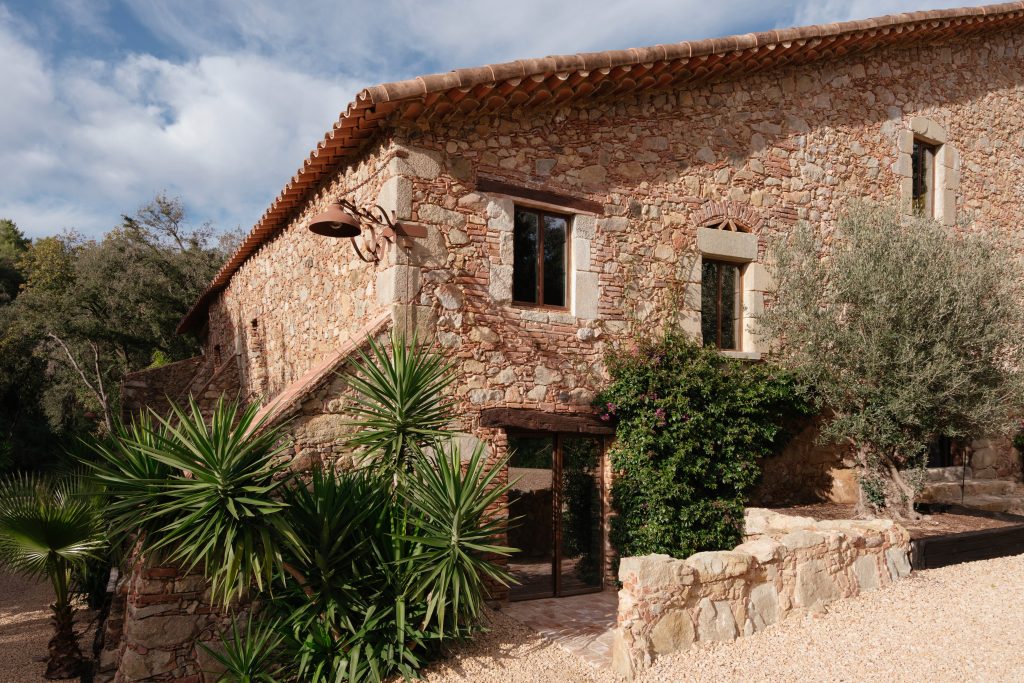
The intervention was conceived as a comprehensive rehabilitation based on heritage conservation principles and sustainable architecture, preserving the original elements as much as possible and maintaining the characteristic volumetry of the masia. The main front was kept intact, while the interventions on the secondary façades were restrained and respectful, preserving the historical reading of the complex and reinforcing its authenticity.
Location: El Maresme, Barcelona
Area: 710 m2
Year 2025
Photography: Marío Martínez

The project is based on preserving the original structural morphology and its constructive logic. The variations introduced are integrated into the natural evolution of the building.


Natural ventilation is improved, daylighting is optimized, and visual relationships between spaces are established, following principles of passive design and thermal comfort.
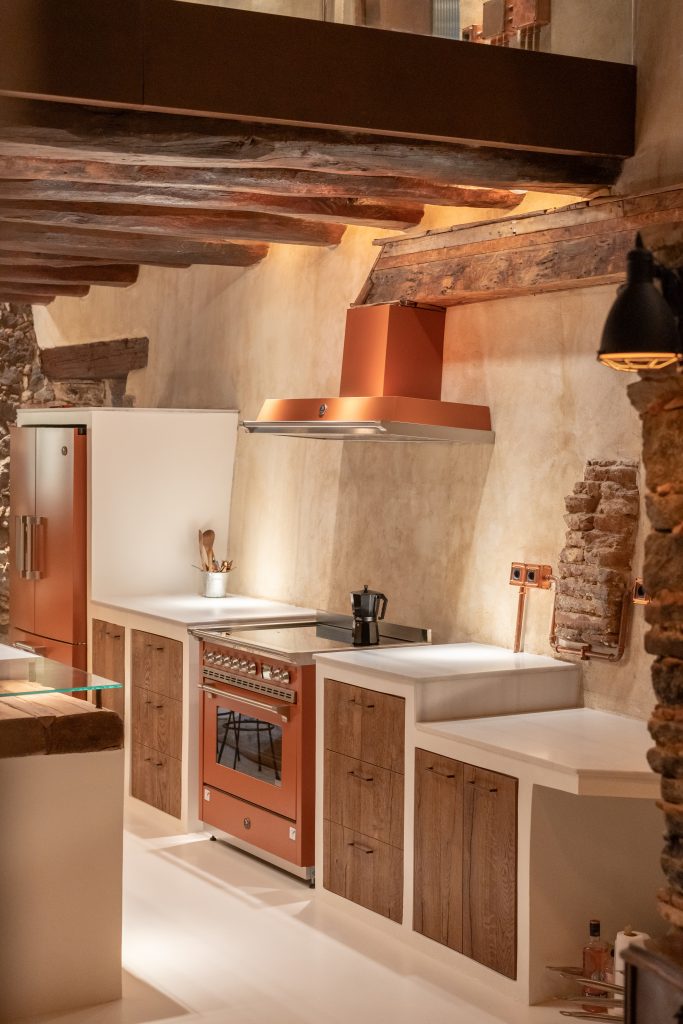
Inside, significant elements of the existing material heritage are recovered and reinterpreted through a contemporary lens. The former kitchen is updated while preserving and enhancing the original features that define its character.

The former winemaking production area is transformed into a double-height daytime living space, where the historic cupsare recovered and given renewed prominence.


The former stables are reorganized to accommodate the bedrooms, faithfully respecting their historical proportions, and the existing arch in the rear courtyard is restored to create a fluid transition between the interior spaces and the secondary patio.

Today, the masia operates as a small rural hotel with five double rooms and a generous common area comprising a living room, dining room, and kitchen.


The overall atmosphere conveys a sense of calm and connection with nature, integrating the Maresme landscape and the quiet character of the architecture.
The project seeks for visitors not only to inhabit the building, but to experience the masia through its circulation paths, the variation of natural light, the texture of materials, and the spatial sequences that reveal the history of the place.
The intervention was guided by a principle of minimal impact and respect for the built heritage. A prior archaeological study ruled out the presence of significant remains, allowing for the incorporation of a ventilated crawl space slab that improves the hygrothermal performance of the floor, prevents rising damp, and discreetly accommodates building services.

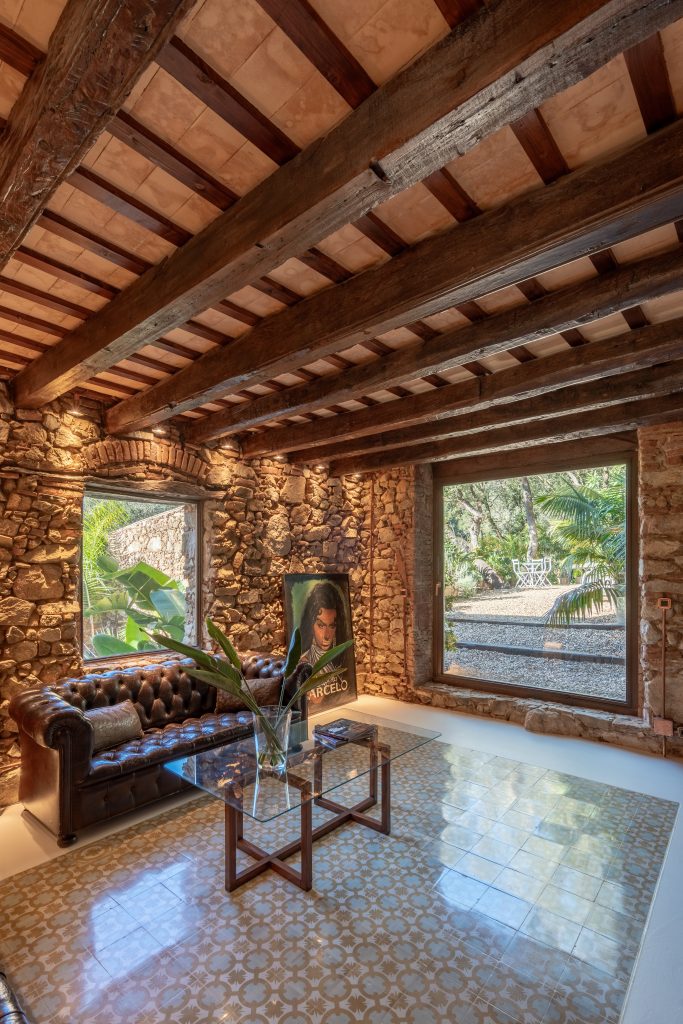
The materials used are fully compatible with traditional construction techniques: lime mortars, wood, stone, and corten steel.


Both the exterior and interior joinery are executed in corten steel, maintaining material harmony throughout the complex and providing a clear, honest contemporary language.




The climate control system, based on underfloor heating and cooling, is integrated into the floor finishes.

In the transitional areas, small-format travertine flooring adds warmth and continuity, subtly guiding movement and accompanying the inhabitant as they move between the different spaces of the masia.


At the heart of the complex, a covered courtyard with a mechanical opening is introduced, functioning as a bioclimatic lung.
The aim is not to return the masia to an idealized state of the past, but to allow its history to continue in a legible way through a respectful and contemporary comprehensive rehabilitation, incorporating new layers of life that coexist in harmony with the existing ones.


Before


